Explore our comprehensive list of Points of Interest. From ancient ruins and historic landmarks to vibrant markets, museums, and more, we’ve got you covered.
Explore the colonial city of Antigua Guatemala and its surroundings with our comprehensive list of Points of Interest. From ancient ruins and historic landmarks to vibrant markets, museums, and more, we’ve got you covered.
Browse our extensive directory to learn about the top attractions in Antigua, including the famous Parque Central, the imposing Catedral de Santiago, and the fascinating ruins of Convento de las Capuchinas. Get a glimpse into the city’s rich cultural heritage with a visit to the bustling Mercado Central.
What’s more, many of these landmarks also feature videos, allowing you to preview and plan your itinerary. Get a sneak peek at the stunning architecture, vibrant street life, and breathtaking natural surroundings that make Antigua Guatemala a truly unforgettable destination.
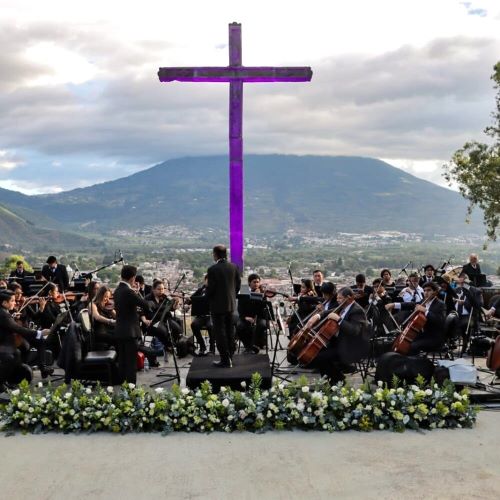
Perched atop the hills that surround the colonial city of Antigua Guatemala stands the Cerro de la Cruz, offering a panoramic vista that captures the essence of this remarkable destination. With its commanding views of the city’s architectural splendor and the breathtaking backdrop of surrounding volcanoes, Cerro de la Cruz is a must-visit spot for both locals and tourists seeking a memorable experience.
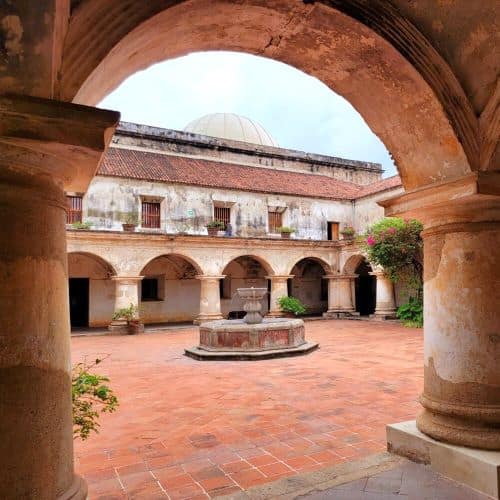
Located in the heart of Antigua, La Iglesia y Convento de las Capuchinas stands as a captivating destination that radiates tranquility and architectural splendor. This remarkable complex, one of Antigua’s most visited, invites visitors to immerse themselves in a serene and captivating experience within the city’s center. It also provides a unique insight into the political and religious concerns of the day during which this structure was erected, and its later fate.
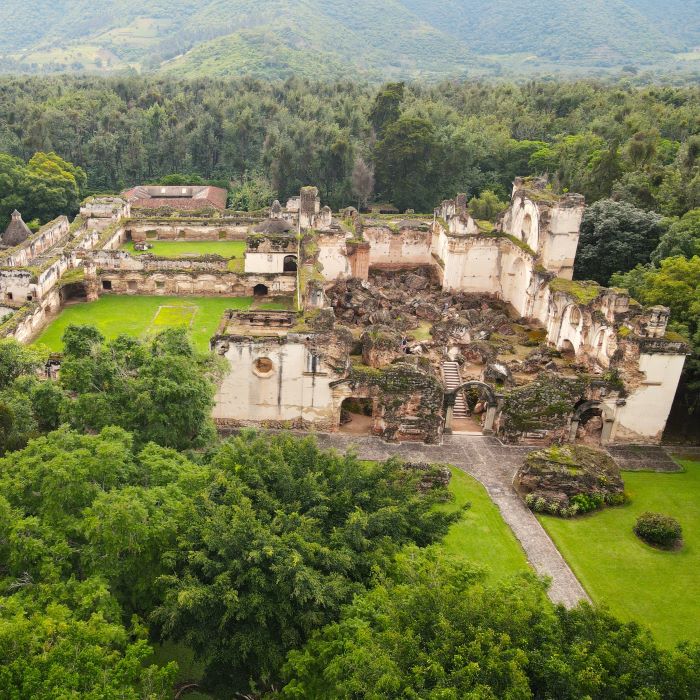
Behind the Mercado Central, on the outskirts of Antigua, you will find the imposing ruins of this 18th century Church and Monastery built by the Franciscan Recollects from 1701 – 1715. Their Church was one of the largest in the former capital of Guatemala. Sadly, ravaged by earthquakes and neglect, only a skeletal structure remains of this once sprawling spiritual center, but it’s well worth a visit when visiting Antigua.
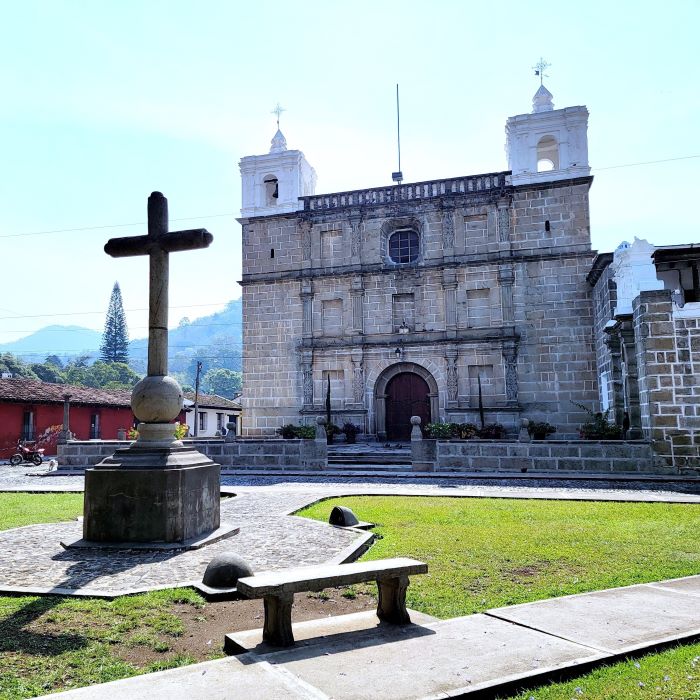
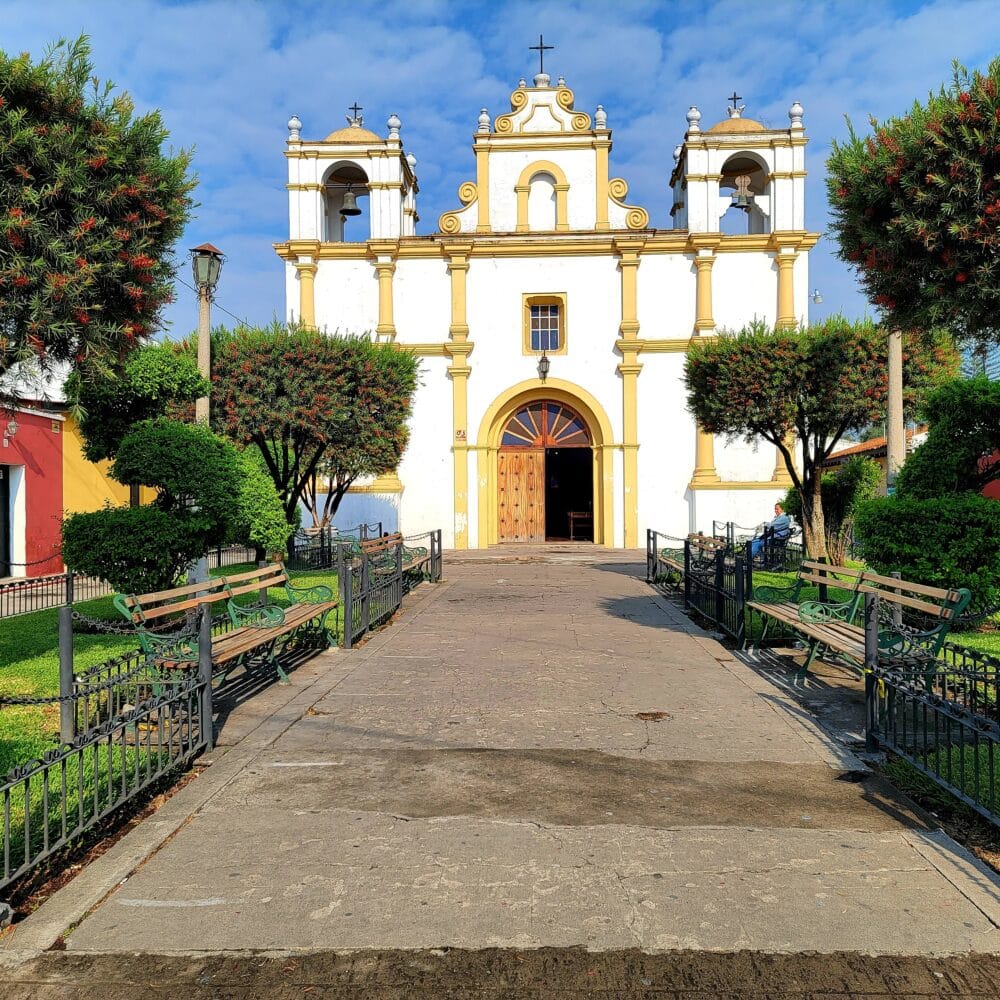
Iglesia Escuela de Cristo is a beautiful Spanish colonial, and still active, church located on the southeast side of Antigua. The original church and hermitage were built by the Franciscans in the early 16th century. It remained under their care until the Escuela de Cristo was founded in 1664. In 1730, Master Architect Diego de Porras rebuilt the church that you see here today. The church is particularly famous for its Holy Week processions, which draws large crowds of locals and visitors alike.
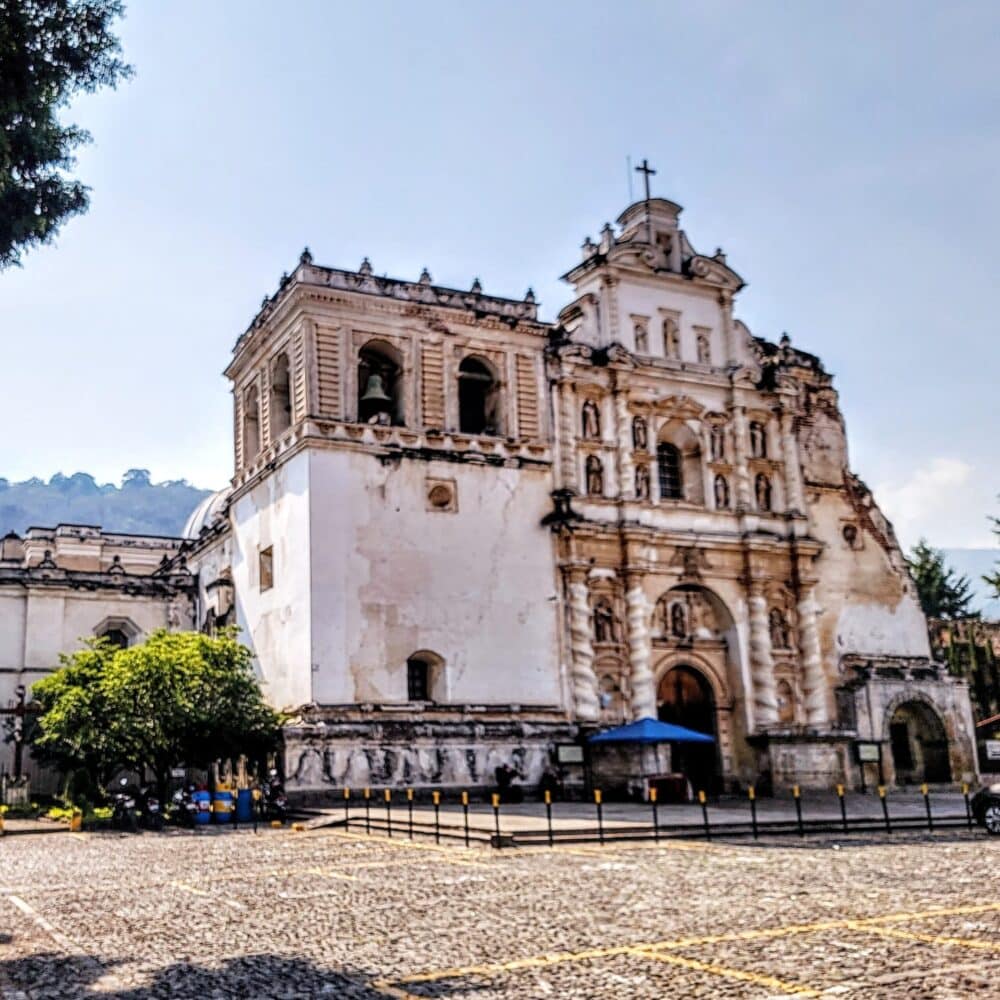
Iglesia San Francisco el Grande has a storied history that dates back to the 16th century. Built by the Franciscan Order, starting in 1579, this massive religious and cultural center encompassed four whole city blocks. The church still has regularly scheduled services and masses of people continue to visit the church to pay homage to Santo Hermano Pedro, whose remains are buried there. There is also a museum dedicated to the Saint housed within the ruins of the monastery. Over the years, the complex has withstood numerous earthquakes and restorations, testifying to the resilience of Antigua’s architectural treasures.
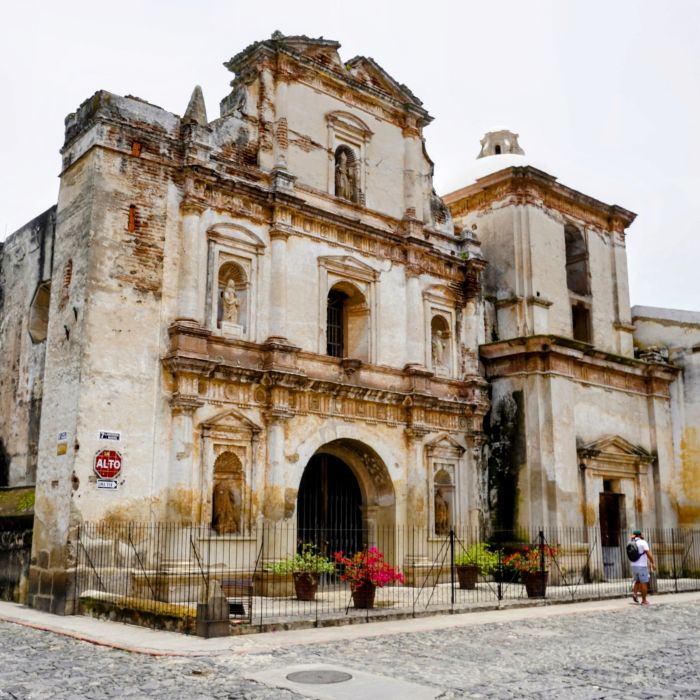
Discover the rich history and heritage of Antigua Guatemala at the Museo de San Agustín. Located in the restored ruins of the former Convent of San Agustín, this museum showcases the exhibition “Fragments of the Past,” featuring valuable archaeological pieces and a room dedicated to pre-Hispanic Mayan culture.
This Monument, dedicated to the Great Guatemalan poet and Jesuit priest Rafael Landívar, can be found on the Alameda de Santa Lucía in Antigua Guatemala. Landívar (1731 – 1793) is best known for his work, Rusticatio Mexicana; 15 books, 5348 verses, written in Latin, published in Europe, during his time in exile, after the Jesuits were expelled from the Spanish Colonies in 1767. It’s considered one of the greatest poetic descriptions of Latin America ever written. In 1950, Landívar’s remains were returned to Guatemala where they found their final resting place at this monument.
Ermita de Santa Lucia was the first church to be built in Santiago (Antigua) in 1542 under the direction of Bishop Francisco Marroquín. It would serve as the principle place of worship during the early days of construction of the new capital as well as the provisional cathedral until the official one on the central square was built. It was severely damaged in the quake of 1773 and reconstructed in 1960. It’s located on the southwest quadrant of Antigua.
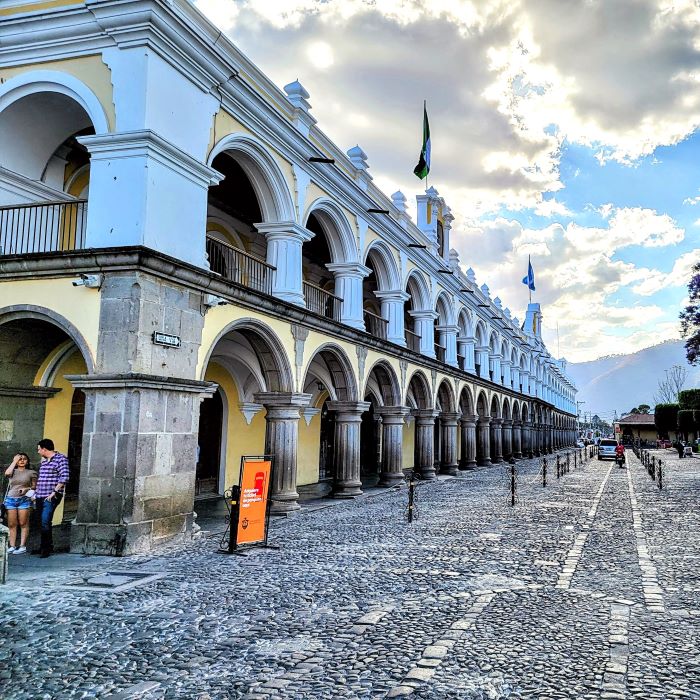
When the Spaniards moved the seat of government from Cuidad Vieja to Santiago (present day Antigua) in 1543, it was from this building that they ruled over all of Guatemala, Belize, El Salvador, Honduras, Nicaragua, Costa Rica, and parts of Mexico, including Chiapas, Tabasco, and the Yucatan. As the Political and Military headquarters of the Spanish Colonies, the Palace housed royal offices, the royal treasury, working spaces for scribes and administration, barracks for guards and troops, even a stable for 34 horses. Until 1773 when, due to an earthquake, a decision was made to move the capital to Guatemala City.
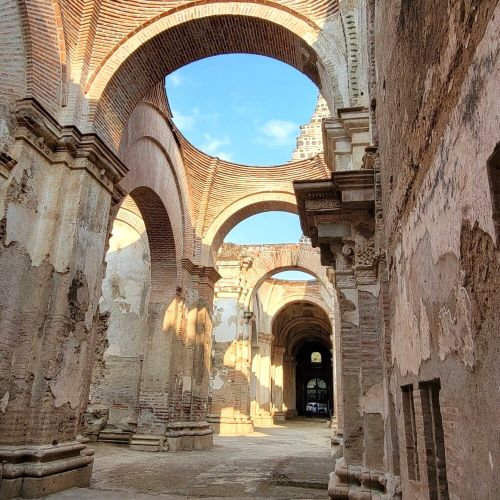
The entrance to the ruins of the Metropolitan Cathedral of Santiago can be found behind and on the south side of the San José Cathedral that sits on the east side of the Main Square. For a small entrance fee, you can explore the remains of the original church of Santiago that was completed in 1680 under the direction of Master Architect Joseph de Porras and Captain Martín de Andújar. It took eleven years to build.
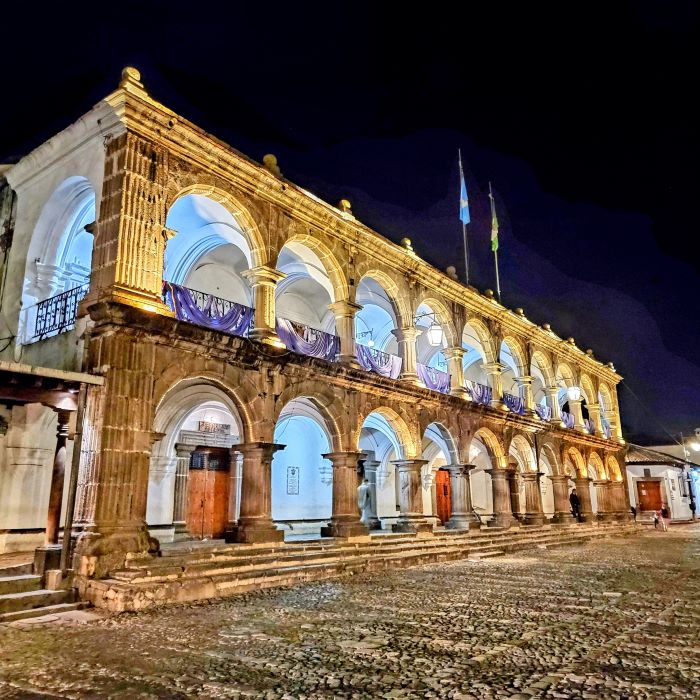
The City Hall Palace, inaugurated in 1743, is located on the north side of Antigua’s Main Square. It’s in this building that the Mayor and City Council serve the needs of the residents of Antigua, administrating various city services, including property taxes, water, permits, and fines. The building was abandoned in 1779 when the new capital was established in Guatemala City until the mid-19th century when the city government of Antigua was restored.
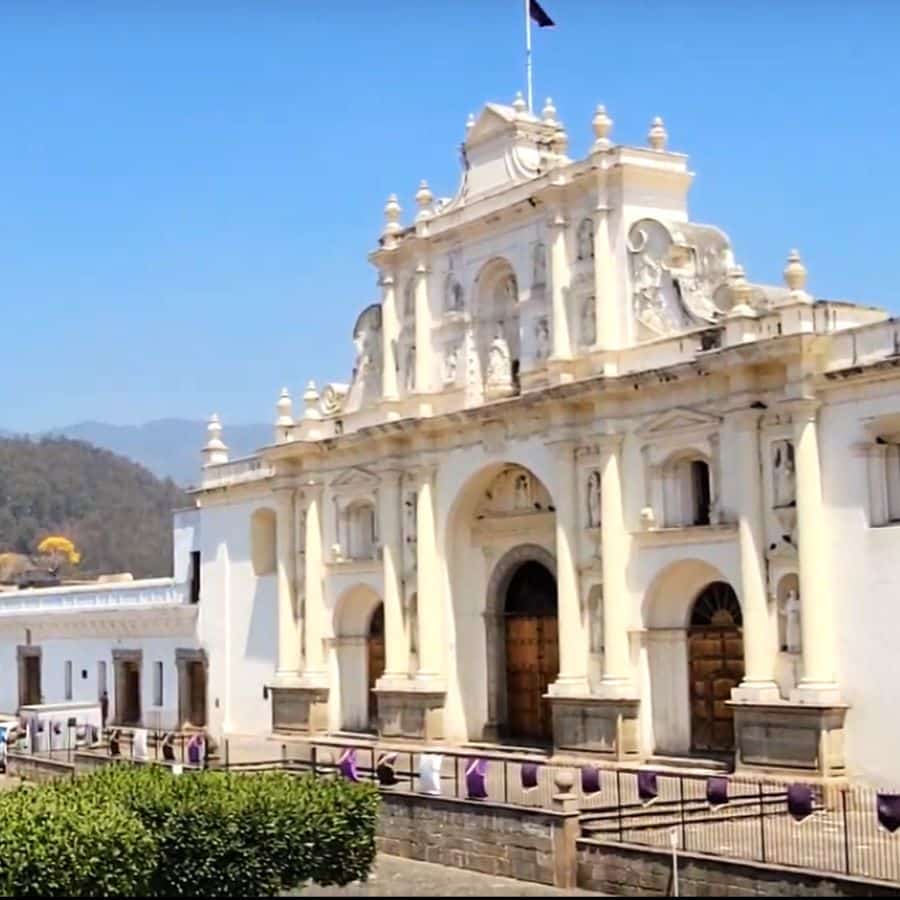
Located on the east side of the Main Square, you will find the Cathedral that now houses the Parish of San José. Completed in 1680 under the direction of Master Architect Joseph de Porras and Captain Martín de Andújar, the Cathedral suffered major damage in the earthquake of 1773. Left idle until partial restoration of the entrance, baptistry, and two chapels began in the mid 1800s. Regular mass services are conducted here daily. You can view the ruins of the Cathedral of Santiago through the entrance on the south side.